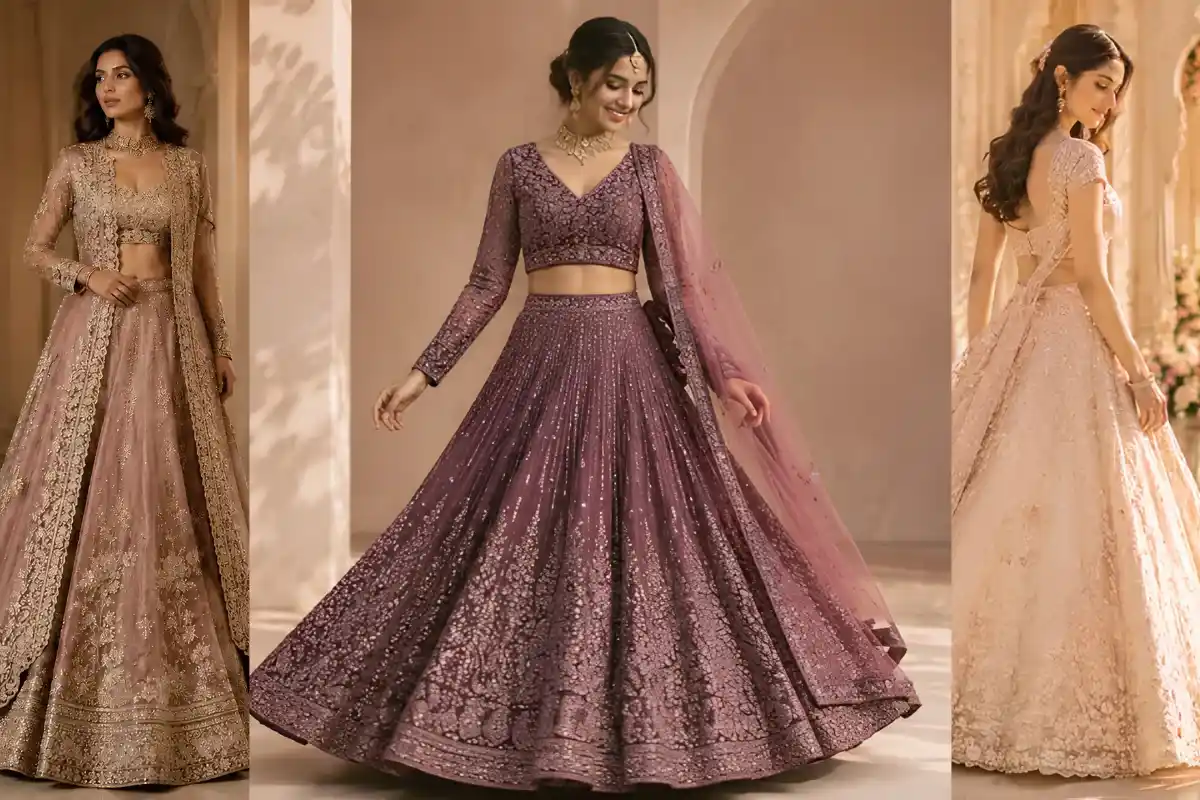


Types of Lehenga Choli: The Ultimate 2026 Guide to Styles, Silhouettes, and Occasions
August 4, 2026
Best Lehenga Colors for Brides in 2026: The Ultimate Guide to Trends, Skin Tones, and Styling
August 17, 2026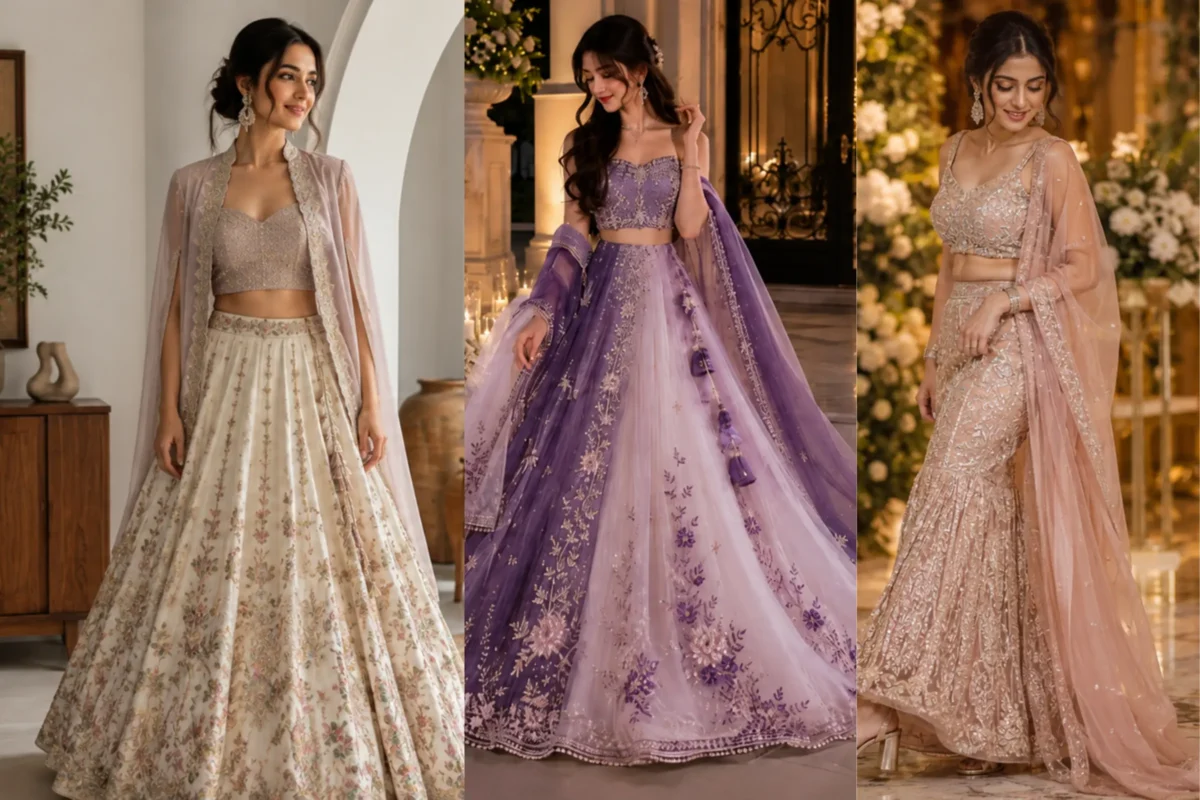
Choosing a lehenga should be exciting. But once you start comparing silhouettes, fabrics, embroidery, blouse styles, dupattas, and hundreds of designs, it can quickly become overwhelming.
You may love a lehenga on Pinterest and then wonder whether the same shape will work for your body. Or you may find the perfect colour but have no idea whether the fabric is practical for a summer wedding, sangeet, reception, or daytime event.
That is exactly where this guide can help.
Think of it as having a fashion-savvy friend beside you while you shop. We will break down the main lehenga styles, explain how different silhouettes sit on the body, look at fabrics and styling choices, and help you match your outfit to the occasion.
And because personal style matters just as much as fashion rules, you will not find rigid advice telling you what you can or cannot wear. We will break down the main lehenga styles, explain how different silhouettes sit on the body
A well-chosen lehenga does not just fit your body. It fits your personality and the moment you are stepping into.
By the end of this guide, you will have a much clearer idea of which lehenga styles are worth trying, how to style them in a polished way, and how to make smarter choices without getting lost in endless inspiration photos.
Types of Lehengas: The Ultimate Silhouette Guide
Before falling in love with embroidery or colour, look at the silhouette.
The silhouette is simply the overall shape of your lehenga. It affects how the skirt falls from your waist, how much volume it creates, how easily you can move, and even how the outfit appears in photographs.
Two lehengas can use the same fabric and embroidery but feel completely different because of their cut.
For example, an A-line lehenga gives you a clean and balanced shape, while a circular lehenga creates much more volume and movement. A fish-cut style stays close to the body before flaring near the knees, giving it a more fitted and contemporary feel.
There is no single silhouette that works for every woman.
Your height, proportions, comfort level, personal style, fabric choice, and even the event itself can influence what feels most flattering. Body-shape recommendations are therefore best treated as useful starting points, not strict rules.
Here is a quick comparison before we look at each style more closely.
| Lehenga Type | What the Silhouette Looks Like | Often Works Well For | Best Occasions | Fabric Ideas | Styling Tip |
| A-Line Lehenga | Fitted around the waist and gradually widens towards the hem, creating an “A” shape. | A very versatile option for most proportions, especially pear and hourglass shapes. | Weddings, receptions, festive events and family functions. | Silk, georgette, chiffon, organza and brocade. | Pair it with a more fitted choli to balance the flare. A necklace or detailed neckline can also draw attention upward. |
| Circular or Flared Lehenga | Uses generous fabric and multiple panels to create a wide, flowing circle around the body. | Hourglass and straighter frames, or anyone who simply enjoys a fuller silhouette. | Bridal events, sangeet nights and larger receptions. | Silk, raw silk, georgette, net and organza. | Keep the upper half relatively balanced so the skirt remains the statement. Can-can underneath can add more structure when you want extra volume. |
| Fish-Cut Lehenga | Fits closely from the waist through the hips and thighs before flaring around the knees. | Often chosen by women who enjoy highlighting their natural curves. | Receptions, cocktail events and contemporary wedding functions. | Crepe, georgette, stretch velvet and other fabrics with a fluid fall. | Heels can help lengthen the overall silhouette. Softer, lighter fabrics usually make this fitted style easier to move in. |
| Panelled Lehenga | Constructed using several vertical panels that create controlled flare and a smooth fall. | A flexible choice for pear, apple and straighter body shapes. | Mehendi, haldi, daytime celebrations and semi-formal events. | Georgette, cotton silk, silk blends and lightweight brocade. | Play with contrasting panels, borders or embroidery. A longer choli or jacket also works particularly well with this shape. |
| Mermaid Lehenga | Similar to a fish-cut style, but the flare usually begins more gradually below the knees. | Often suits hourglass and petite proportions, but the final effect depends heavily on fit and fabric. | Sangeet, receptions and evening celebrations. | Crepe, georgette, satin and softer silk blends. | A structured or corset-inspired choli can define the waist. Keeping the lower section lighter can also prevent the silhouette from feeling too heavy. |
1. A-Line Lehenga

If you are unsure where to begin, the A-line lehenga is one of the easiest silhouettes to try.
It sits closer around the waist and gradually becomes wider towards the hem. The result is clean, balanced, and easy to style without creating too much volume around the body.
That versatility is its biggest strength.
An A-line lehenga can work for weddings, receptions, festive dinners and even less formal celebrations depending on the fabric and embroidery you choose.
For a daytime event, something lighter such as georgette, organza or chiffon can keep the outfit comfortable. For a wedding or reception, silk, brocade or heavier embroidery can give the same silhouette a more formal finish.
Styling is simple too. A fitted choli creates a nice balance against the gradually flared skirt. If the lehenga has heavy embroidery, keep the blouse cleaner. If the skirt is minimal, you have more freedom to experiment with sleeves, necklines or jewellery.
Best part: it is versatile enough to dress up or down.
Keep in mind: very stiff fabrics can make an A-line skirt appear wider than expected, so always consider the fabric along with the cut.
2. Circular or Flared Lehenga

Want movement when you walk or dance? This is where the circular lehenga really shines.
A circular or fully flared lehenga uses a generous amount of fabric to create a wide skirt. When you spin, the skirt opens beautifully, which is why this style remains especially popular for bridal looks, sangeet nights and larger celebrations.
It naturally creates more volume than an A-line silhouette.
That can be exactly what you want when the occasion calls for something more dramatic. But balance matters.
If the skirt is heavily embroidered and very full, a cleaner or more structured choli can prevent the outfit from feeling visually crowded. You can also use can-can underneath if you want more shape and structure, although it is not essential for every circular lehenga.
Fabric will make a major difference here. Lightweight georgette creates soft movement, while raw silk or brocade gives the flare more body.
Best part: beautiful movement and a strong occasion-wear feel.
Keep in mind: extra volume also means extra weight. If you plan to dance for hours, check how comfortable the lehenga feels before committing.
3. Fish-Cut Lehenga

A fish-cut lehenga gives you a completely different mood.
Instead of flowing away from the waist, it stays fitted through the hips and thighs before opening near the knees. This creates a defined, curve-following silhouette that feels more contemporary than traditional full-flare styles.
It is particularly popular for receptions, cocktail functions and modern wedding celebrations.
Because the cut sits closer to the body, fit becomes especially important. The lehenga should follow your shape without restricting your steps or making sitting uncomfortable.
Fabric matters here too.
Crepe and georgette usually move more easily than very stiff materials. A little softness in the fabric helps the skirt follow the body naturally before falling into the flare.
You may also want to test the outfit while walking, sitting and climbing a few steps.
Looking polished matters. Being able to enjoy the event matters more.
Best part: it creates a sleek and defined silhouette.
Keep in mind: the closer fit gives you less freedom of movement than an A-line or circular lehenga.
4. Panelled Lehenga

The panelled lehenga is a clever middle ground between structure and movement.
Instead of being cut from one broad piece of fabric, the skirt is created using several vertical panels stitched together. Depending on the design, those panels can create anything from a gentle A-line shape to a fuller flare.
This construction also gives designers plenty of room to play with colour and embroidery.
You might see alternating colours, embroidered panels, printed sections or contrasting borders. That makes panelled lehengas particularly useful when you want something interesting without relying on extremely heavy embellishment.
They work beautifully for mehendi, haldi and daytime celebrations where you want your outfit to feel festive but still easy to wear.
A long choli or lightweight jacket can work especially well with this silhouette because the vertical lines help keep the overall look balanced.
Best part: versatile, comfortable and easy to personalise.
Keep in mind: too many contrasting panels can make a lehenga feel busy, so let either the colour combination or the embroidery take the lead.
5. Mermaid Lehenga

The mermaid lehenga sits somewhere between fitted glamour and softer movement.
It is closely related to the fish-cut silhouette, but the transition into the flare is usually more gradual. Instead of a sharp change around the knees, the skirt flows outward more gently.
That softer transition can make it feel slightly easier to style.
A structured blouse, fitted choli or corset-inspired top pairs naturally with this shape because it continues the defined line through the waist.
For the skirt, fabrics such as crepe, georgette or satin work particularly well because they can follow the body without creating unnecessary stiffness.
One styling detail is especially worth watching: embroidery placement.
Very dense embroidery around the lower fitted section can add visual weight and make movement more difficult. Keeping the embellishment balanced often gives the silhouette a cleaner finish.
Best part: you get a fitted shape with a softer, more graceful flare.
Keep in mind: proper tailoring makes a major difference. Even a beautiful mermaid lehenga can feel awkward if the knee and hip measurements are not right.
Which Lehenga Silhouette Should You Choose?
Do not choose your lehenga from body-shape advice alone.
Use those recommendations as a starting point, then think about three things: how you want to feel, how much you will move, and where you are wearing it.
If you want something versatile and easy to wear, start with an A-line lehenga.
If you love dramatic movement and traditional volume, explore circular or flared lehengas.
If you prefer a fitted, contemporary shape, try a fish-cut or mermaid lehenga.
And if you want something comfortable with more room for colour, panels and creative detailing, a panelled lehenga is well worth considering.
Most importantly, try the outfit as you would actually wear it.
Walk in it. Sit down. Turn around. Check the waistband. Move your arms in the choli. Try it with the shoes you plan to wear.
A lehenga can look perfect while you are standing in front of a mirror and still become uncomfortable twenty minutes into an event.
The right silhouette should make you feel polished without making you spend the entire celebration adjusting your outfit.
A-Line Lehenga

If you want a lehenga that feels flattering without being difficult to wear, an A-line is one of the safest places to start.
The skirt sits neatly at the waist and gradually widens towards the hem, creating the familiar “A” shape. That clean fall can make the body look longer while still giving you enough room to walk, sit, and enjoy a long event comfortably.
It is also one of the most versatile lehenga styles. You can keep it light for a mehendi or daytime celebration or choose richer embroidery for a wedding or reception.
Why an A-Line Lehenga Works
The biggest advantage is balance. It does not create too much volume around the hips, yet it still gives you the graceful movement you expect from a lehenga.
It also handles both light and heavy embellishment well. A simple embroidered A-line can feel effortless for a smaller function, while zari, sequins, or detailed thread work can make the same silhouette feel bridal.
What you’ll love:
- Creates a clean, lengthening line
- Comfortable for longer events
- Works with light or heavy embroidery
- Easy to style across different occasions
- Flatters a wide range of body proportions
The only drawback? A very simple A-line can feel a little understated if you are choosing it for your bridal outfit.
The solution is easy. Let the embroidery, blouse, jewellery, or dupatta bring the drama.
Styling tip: Try a contrasting dupatta in a stronger colour if the lehenga and choli are in similar tones. It breaks up the outfit and gives the overall look more personality.
Circular or Flared Lehenga
If your dream lehenga involves a full skirt and that satisfying twirl on the dance floor, look at circular or flared styles.
This silhouette uses much more fabric than an A-line lehenga, creating a wide, dramatic sweep around the body. It has a distinctly traditional feel and works especially well for bridal events, sangeet nights, and larger receptions.
The movement is the main attraction.
A circular lehenga photographs beautifully while walking or spinning, which is one reason brides continue to love the shape.
Why a Circular Lehenga Works
The generous flare creates visual balance and gives the lower half of the outfit a smooth, flowing shape. If you prefer not to wear something fitted around your hips or thighs, this style gives you plenty of freedom.
What you’ll love:
- Creates a full, traditional silhouette
- Looks beautiful in movement and photographs
- Gives plenty of room around the hips and legs
- Works especially well for bridal and sangeet looks
- Can carry detailed borders and heavy embroidery beautifully
There is a practical side to consider, though.
More fabric means more weight. Add heavy embroidery and can-can underneath, and the outfit can become tiring after several hours.
Always walk and sit in the lehenga before making a final decision.
Do You Need Can-Can Under a Lehenga?
Not always.
Can-can is a stiff net layer added underneath the lehenga to give the skirt more volume and structure. It can help a circular lehenga hold its shape instead of falling flat.
For a dramatic bridal look, it can make a noticeable difference. For a softer or more relaxed outfit, you may prefer less can-can or none at all.
Expert tip: Make sure the can-can is fitted properly and does not begin too high around the waist. Too much stiffness can make sitting and walking uncomfortable.
Fish-Cut Lehenga

Prefer a more fitted silhouette? The fishtail lehenga gives traditional occasion wear a more contemporary feel.
It stays close to the body from the waist through the hips and thighs, then opens into a flare around the knees.
The result is sleek, defined, and particularly suited to receptions, cocktail events, and evening celebrations.
Why a Fish-Cut Lehenga Works
Unlike fuller lehengas that create volume, a fish-cut style follows your natural shape.
That makes it a strong choice if you enjoy fitted clothing and want your lehenga to feel more fashion-forward.
What you’ll love:
- Creates a defined, curve-following silhouette
- Photographs particularly well from different angles
- Feels polished for evening events
- Pairs beautifully with fitted or structured cholis
- Offers a modern alternative to traditional full-flare styles
Comfort is the trade-off.
Because the skirt is fitted around the thighs, your movement can be more restricted. Test whether you can walk naturally, climb stairs, sit down, and dance before committing to the outfit.
Fabric also matters. Georgette, crepe, or other fabrics with some fluidity usually feel easier to wear than stiff materials.
You may often see fish-cut lehengas recommended mainly for hourglass figures. Treat that as guidance, not a rule. If you love the silhouette, good tailoring and the right fabric matter far more than a body-shape label.
For someone who prefers more room around the hips, an A-line or circular lehenga may simply feel more comfortable.
Panelled Lehenga

The panelled lehenga deserves more attention than it usually gets.
Instead of being cut as one continuous skirt, it is constructed from several vertical fabric panels. These panels create a controlled flare while keeping the silhouette light and easy to move in.
It is a particularly clever choice for daytime celebrations.
Why a Panelled Lehenga Works
The vertical seams naturally lead the eye up and down, which can create a longer, cleaner appearance.
It is also extremely versatile. Designers can use contrasting colours, prints, embroidery, gota patti, or different textures on each panel without making the whole lehenga feel too heavy.
What you’ll love:
- Lightweight compared with many circular lehengas
- Comfortable to walk and dance in
- Great for mehendi, haldi, and daytime functions
- Vertical panels create a lengthening visual effect
- Easy to dress up or down
If you are shopping for a very formal bridal lehenga, a lightly decorated panelled style may not give you the same sense of drama as a circular silhouette.
But with richer fabrics, statement borders, or heavier embroidery, it can still feel special.
This is also a useful silhouette to explore if you have a pear-shaped frame and prefer a skirt that falls smoothly instead of adding extra volume around the hips.
Styling tip: Gota patti and colourful panel work look especially appropriate for mehendi and daytime celebrations.
Mermaid Lehenga

Think of the mermaid lehenga as the softer sister of the fish-cut.
It still follows the body through the waist and hips, but the transition into the flare is usually more gradual. That gives you the defined shape of a fitted lehenga with slightly easier movement.
For that reason, it works particularly well for receptions, sangeet evenings, and modern wedding celebrations.
Why a Mermaid Lehenga Works
It gives you structure without looking overly stiff.
Petite frames can especially benefit from the long, uninterrupted line, provided the lehenga is not overloaded with heavy embroidery.
What you’ll love:
- Defined but softer than a traditional fish-cut
- Works beautifully for evening events
- Can make petite proportions appear longer
- Pairs well with corset-style and structured cholis
- Offers a modern fusion of traditional and contemporary styling
Tailoring is crucial here.
If the flare begins at the wrong point or the knee area is too tight, the fabric can bunch and make walking uncomfortable.
For women who prefer less emphasis around the midsection, an A-line or gently flared style may feel easier to wear. Again, that is a comfort choice rather than a fashion rule.
Expert tip: When ordering a mermaid lehenga online, pay close attention to the hip, thigh, knee, and full-length measurements. Waist size alone is not enough for this silhouette.
Fabrics and Embellishments: The Texture of Tradition
The silhouette gives your lehenga its shape. The fabric gives it its personality.
A silk lehenga and a chiffon lehenga can use almost the same cut and still look completely different.
Fabric also affects something even more important: how comfortable you feel after several hours of wearing the outfit.
So before choosing a lehenga because you love its embroidery, ask yourself where and when you will actually wear it.
Common Lehenga Fabrics and When to Wear Them
1. Silk

Silk gives a lehenga richness and structure.
It works particularly well for bridal outfits, formal weddings, and cooler-weather celebrations because it can support detailed embroidery without losing its shape.
Zari, zardozi, and traditional borders pair naturally with silk.
Best for: Weddings, bridal wear, winter celebrations, and formal evening events.
Keep in mind: Heavily embroidered silk can become quite weighty, so comfort should be part of your decision.
2. Georgette

Georgette is one of those fabrics you appreciate even more once you start moving in it.
It is light, fluid, and falls softly around the body. That makes it a practical option for summer weddings, sangeet nights, and events where you expect to dance.
Best for: Summer celebrations, sangeet, receptions, and lighter occasion wear.
It also works beautifully when you want embroidery without the stiffness of a heavier base fabric.
3. Chiffon

Chiffon feels even lighter and softer than georgette.
Its fluid drape makes it especially suitable for daytime functions, destination weddings, and warm-weather celebrations.
Because it is delicate and can be slightly sheer, lining quality matters.
Best for: Day weddings, beach celebrations, summer events, and minimal lehenga looks.
4. Velvet

Velvet brings depth and richness to colour.
Deep maroon, emerald, navy, wine, and jewel tones can look particularly rich in velvet because of how the surface interacts with light.
But this is very much a cooler-weather fabric.
Best for: Winter weddings, evening receptions, and formal events.
Wearing heavy velvet to a hot outdoor wedding may look beautiful in photographs and feel uncomfortable very quickly.
5. Net and Tulle

Want volume without adding the weight of several heavy fabric layers?
Net and tulle can help.
They are commonly used for layered skirts, overlays, and dupattas, giving a lehenga a lighter, more airy appearance.
Best for: Layered lehengas, contemporary bridal looks, receptions, and modern occasion wear.
Check the quality carefully. Stiff or rough net can irritate the skin, especially around the waist and arms.
6. Raw Silk

Raw silk has more visible texture than smooth silk and usually comes with a softer, more matte finish.
It feels traditional without being overly formal, which makes it useful for both daytime and evening celebrations. Silk gives a lehenga richness and structure. It works particularly well for bridal outfits…
Best for: Mehendi, engagement events, wedding functions, and understated bridal looks.
8. Organza

Organza is crisp, light, and naturally structured.
It works beautifully when you want volume without using a very heavy fabric. You will often see it used for layered skirts, statement dupattas, floral details, and more contemporary lehenga designs.
Best for: Daytime weddings, modern celebrations, engagement events, and layered silhouettes.
Because organza holds its shape, good tailoring is important. Too much volume in the wrong place can make the outfit feel stiffer than expected.
A Simple Seasonal Rule
For warm-weather weddings, fabrics such as georgette, chiffon, lightweight net, and organza usually feel easier to manage.
For cooler celebrations, silk, raw silk, brocade, and velvet can give you more richness and structure.
Your comfort should always be part of the styling decision.
Popular Lehenga Embroidery and Embellishment Types
The embroidery is often where a lehenga tells its story.
Traditional techniques can make an outfit feel like a modern heirloom, while sequins, pearls, and three-dimensional details can move it in a more contemporary direction.
1. Zari

Zari uses metallic-looking thread, traditionally associated with gold or silver effects, to create decorative patterns.
It is commonly used on bridal and formal Indian wear because it pairs beautifully with silk, brocade, and other rich fabrics.
Best for: Weddings, bridal wear, and traditional formal events.
2. Zardozi

Zardozi is a more dimensional form of decorative embroidery traditionally associated with metallic thread and elaborate surface work.
It tends to feel richer and heavier than simple thread embroidery, which is why you often see it on bridal lehengas and formal occasion wear.
Best for: Bridal lehengas and grand wedding events.
Because detailed zardozi can add considerable weight, check the full outfit before buying, not just the design.
3. Sequins

Sequins reflect light, making them particularly effective for evening events.
You can choose delicate scattered sequins for a softer effect or dense all-over work when you want the lehenga itself to become the statement.
Best for: Receptions, cocktail functions, sangeet nights, and evening parties.
4. Mirror Work

Small reflective mirrors are stitched into the fabric to create a bright, festive surface.
Mirror work feels especially appropriate for colourful celebrations and traditional dance events.
Best for: Navratri, mehendi, festive daytime functions, and destination celebrations.
5. Gota Patti

Gota patti is closely associated with traditional Rajasthani decorative work and uses metallic ribbon-like appliqué to create motifs and borders.
It gives you festive detail without always carrying the weight of denser embroidery.
Best for: Mehendi, haldi, daytime weddings, and festive celebrations.
6. Thread Work

Thread embroidery gives you enormous flexibility.
It can be delicate and tonal or colourful and highly detailed, depending on the design. Because it does not rely entirely on metallic elements, it can also feel softer and more relaxed.
Best for: Almost any occasion, depending on the density and design.
7. 3D Embellishments

Flowers, pearls, beads, fabric petals, and raised motifs give the surface of the lehenga noticeable texture.
They work particularly well when you want a contemporary look without relying entirely on traditional metallic embroidery.
Just remember that more texture is not always better.
If the skirt has detailed 3D work, keeping the jewellery or blouse slightly cleaner can give the whole outfit more breathing room.
note: Claims that a particular embroidery technique is “the most popular” or a “major 2026 trend” should be supported by a current source such as Vogue India, a recognised designer interview, FDCI coverage, or another credible fashion publication before publication.
How to Choose Lehenga Fabric for Your Body and Climate
Body-shape advice can be useful, but it should help you narrow down options, not tell you what you are allowed to wear.
Fabric weight, stiffness, drape, embroidery, and tailoring often affect the final result more than the fabric name itself.
Always Check the Climate
This one sounds obvious until you are standing at an outdoor summer wedding in a heavily embroidered velvet lehenga.
For hot weather, lighter and more breathable-feeling constructions are generally easier to manage.
For cooler weddings, you have more freedom to enjoy velvet, silk, layering, and heavier embroidery.
And if you are buying your lehenga online, do not judge fabric from photographs alone.
Whenever possible, order a fabric swatch or ask the seller for close-up fabric images and videos in natural light. Some retailers and couture stores provide swatch services, which can help you understand the colour, texture, weight, and transparency before you commit.
A lehenga should feel right in real life, not just look perfect on the product page.
Lehenga by Body Type: Flatter Your Figure
The right lehenga should help you feel comfortable, balanced, and confident.
Body shape can be a useful starting point when choosing a silhouette, but it is not a strict rulebook. Fabric, tailoring, blouse length, waistband placement, and even the way you drape your dupatta can change how a lehenga looks on you.
So use these recommendations as guidance, then choose what feels most like you.
1. Best Lehenga for a Pear-Shaped Body

A pear-shaped body usually means the hips are wider than the bust, with more visual weight in the lower half.
If your goal is to create a little more balance between your upper and lower body, the lehenga shape can make a noticeable difference.
Very fitted styles can draw more attention to the hips, while softer flares usually fall more smoothly over them.
Best Lehenga Styles for Pear Shapes
Start with:
- A-line lehengas
- Circular lehengas
- Softly flared panelled lehengas
These styles move away from the body gradually instead of clinging to the hips.
If you prefer less emphasis on the lower half, fish-cut and very fitted mermaid styles may feel less comfortable. That does not mean you cannot wear them. It simply means they create a different effect.
Styling Tips for Pear-Shaped Bodies
Bring a little more interest to the top half.
A choli with embroidery, beadwork, statement sleeves, or a detailed neckline can naturally draw the eye upward.
You can also try:
- A darker lehenga with a lighter or brighter choli
- Statement earrings or a necklace
- A dupatta draped over one shoulder to create a longer vertical line
- A fitted blouse that clearly defines the waist
Best tip: If you want your lehenga to skim over the hips instead of adding bulk, softer A-line or circular silhouettes are usually easier to work with.
2. Best Lehenga for an Apple-Shaped Body

Apple-shaped bodies usually carry more fullness around the midsection, with relatively slimmer hips and legs.
The challenge is often finding a lehenga that gives you structure without drawing all the attention to the waistband.
A heavy belt, stiff waistband, or dense embroidery around the stomach can sometimes make the area feel busier than you want.
Best Lehenga Styles for Apple Shapes
Look at:
- High-waisted A-line lehengas
- Panelled lehengas
- Gently flared silhouettes
Vertical panels can create a longer line through the body, while an A-line shape gives you room without clinging.
Styling Tips for Apple-Shaped Bodies
A slightly longer blouse can work beautifully here.
Try a peplum choli, longer fitted blouse, or jacket-style top if you prefer a little more coverage around the midsection.
You can also:
- Keep heavy embroidery away from the waistband
- Choose cleaner vertical details
- Use a statement necklace to bring attention toward the face
- Keep the lehenga structured rather than overly clingy
A well-fitted waistband matters more than a very tight one.
Comfort should always win.
3. Best Lehenga for an Hourglass Body

If your bust and hips are fairly balanced with a clearly defined waist, you may want a lehenga that keeps that natural shape visible.
The main thing to avoid is hiding the waist under too much volume or fabric.
Best Lehenga Styles for Hourglass Shapes
You have plenty of choice.
Try:
- Fish-cut lehengas
- Mermaid lehengas
- Circular lehengas with a fitted choli
- A-line lehengas with a defined waistband
Fitted styles can follow your curves, while fuller lehengas still work beautifully if the waist remains clearly defined.
Styling Tips for Hourglass Bodies
Use your waist as the focal point.
A structured waistband or lehenga belt can highlight the narrowest part of your frame.
You may also like:
- Sweetheart necklines
- Off-shoulder cholis
- Fitted blouses
- Defined waistbands
- Controlled rather than excessive skirt volume
And keep the overall outfit balanced.
If the lehenga has very heavy embroidery, let the choli stay a little cleaner. If the blouse is the statement, the skirt does not need to compete with it.
Expert tip: One strong focal point usually looks more polished than heavy detail everywhere.
4. Best Lehenga for a Rectangle Body

A rectangle body shape usually has similar measurements through the shoulders, waist, and hips.
If you want to create more shape, the goal is to add dimension without making the outfit feel bulky.
Very straight silhouettes can sometimes make the body look even more linear.
Best Lehenga Styles for Rectangle Shapes
Look at styles that add movement and volume.
Good options include:
- Circular lehengas
- Heavily flared lehengas
- Panelled lehengas
- Lehengas with contrasting sections or borders
A fuller skirt can add shape to the lower half, while a structured or detailed blouse can create more dimension above.
Styling Tips for Rectangle Bodies
You can create the illusion of a more defined waist through your blouse and draping.
Try:
- Peplum cholis
- Ruffled blouses
- Heavier embroidery around the bust
- A U-shaped dupatta drape
- A fitted waistband
- Contrasting panels or borders
If you prefer a curvier effect, very minimal straight-cut lehengas may not give you as much shape.
And one practical note: body-shape calculators can be useful for guidance, but do not let a calculator decide what you can wear. Your proportions, comfort, and tailoring matter more than a label.
5. Best Lehenga for a Petite Frame

If you are around 5’3″ or under, the main challenge is often scale.
A very heavy skirt, extremely wide flare, thick border, or several layers of can-can can overwhelm a smaller frame.
The solution is not to avoid volume completely. It is to control it.
Best Lehenga Styles for Petite Women
Try:
- A-line lehengas
- Panelled lehengas
- High-waisted styles
- Lehengas with a subtle flare
Vertical detailing can also help create a longer visual line.
Styling Tips for Petite Frames
A monochromatic outfit can work especially well because it keeps the eye moving from top to bottom without interruption.
You can also try:
- A blouse that ends near the narrowest part of your waist
- A dupatta in a similar shade to the lehenga
- Vertical embroidery or panel lines
- A moderate rather than oversized flare
- Shoes with some height if they are comfortable for you
You do not have to wear very high heels. Even a small block heel can slightly change the fall of the lehenga.
What matters more is that you can walk in them for the whole event.
Occasion-Based Lehenga Ideas: What to Wear and When
A lehenga that works beautifully at a mehendi may feel completely wrong at a formal reception.
That is why occasion matters just as much as body shape.
Think about the mood of the event, the time of day, how formal it is, and how much you will move before choosing your outfit.
1. Wedding Guest Lehenga Ideas

As a wedding guest, you want to look polished and festive without making your outfit feel more bridal than the bride’s.
That balance is easier than it sounds.
Colours That Work Well
For evening weddings, jewel tones can feel rich and formal.
Think:
- Emerald
- Ruby
- Sapphire
- Deep plum
- Burgundy
For daytime weddings, softer pastels can feel lighter and easier.
Fabrics and Embroidery
Good options include:
- Silk
- Georgette
- Velvet for cooler evening events
- Zari work
- Sequins
- Refined thread embroidery
Keep the styling polished rather than overloaded.
A pair of statement earrings, a potli bag, and a neat dupatta drape can be enough.
Quick rule: Day wedding? Go lighter in colour and embroidery. Evening wedding? You can usually handle deeper shades and richer detailing.
2. Bridal Lehenga Ideas

Your bridal lehenga has more responsibility than any other outfit in your wardrobe.
It needs to feel special, photograph well, reflect your personal style, and still let you sit, breathe, walk, and dance.
All of those things matter.
Bridal Colour Ideas
Traditional colours remain beautiful choices:
- Red
- Maroon
- Deep pink
- Wine
But modern brides also explore:
- Pastel pink
- Ivory
- Soft gold
- Sage
- Deep green
- Dusty rose
Do not choose an unconventional colour just because it is fashionable.
Choose it because you genuinely want to see yourself wearing it years from now.
Bridal Fabrics and Embroidery
For a more traditional bridal look, silk and velvet can support detailed work beautifully.
Common embellishment choices include:
- Zardozi
- Zari
- Gota patti
- Pearls
- 3D floral details
- Heavy thread embroidery
Jewellery may include a choker, matha patti, nose ring, layered necklaces, or a double dupatta.
But you do not need everything at once.
If your lehenga is already highly detailed, slightly cleaner jewellery can sometimes look more polished.
And before you buy, sit in it. Walk in it. Move your arms.
Try the full outfit with jewellery and dupatta.
A bridal lehenga is not successful if you look beautiful in it for photographs but feel uncomfortable for the entire event.
Note: If you want to include a bridal stylist quote here, use a real, attributable stylist interview rather than an invented quote.
3. Sangeet and Mehendi Lehenga Ideas

These are the events where your outfit needs to work as hard as you do.
You will probably be walking, dancing, greeting people, and sitting for long periods, so movement matters.
Best Colours
Bright colours naturally suit these celebrations.
Consider:
- Yellow
- Orange
- Pink
- Green
- Turquoise
- Multicolour floral prints
Mirror work, Bandhani-inspired details, and colourful thread embroidery can also work beautifully.
Best Fabrics
Choose something lighter.
Good options include:
- Georgette
- Cotton silk
- Lightweight net
- Soft silk blends
For embroidery, gota patti, mirror work, or colorful thread detailing can keep the outfit festive without making it too heavy.
Styling Tips
Do you actually need a dupatta?
Not always.
For easier movement, you can swap it for:
- A cape
- A lightweight jacket
- An attached drape
- A short embellished shrug
Floral jewellery can also feel especially appropriate for a mehendi look.
Easy Transformation Idea
A simple lehenga can change completely with styling.
For example, imagine a plain cotton or cotton-silk lehenga for a mehendi. Add a contrasting dupatta, bold earrings, fresh flowers, and stronger makeup, and suddenly the outfit feels much more festive.
That is a useful reminder if you are working with a smaller budget.
You do not always need a more expensive lehenga.
Sometimes you need better styling.
Festival Lehenga Ideas for Diwali and Navratri
Festival outfits need to feel festive without becoming difficult to wear for several hours.
That makes comfort especially important.
1. Diwali Lehenga Ideas

For Diwali, richer colors work beautifully.
Think:
- Deep purple
- Maroon
- Red
- Gold
- Emerald
- Navy
Silk, cotton silk, and georgette can all work depending on the weather and formality.
Gota patti, zari, or smaller mirror details add enough celebration without making the lehenga feel overly bridal.
3. Navratri Lehenga Ideas

Navratri gives you much more freedom with colour and movement.
Chaniya choli-inspired outfits, bandhani, mirror work, colorful borders, and embroidered blouses all fit the mood.
And because you may be dancing for hours, this is the perfect event to choose juttis over uncomfortable heels.
Try a Gujarati-Inspired Dupatta Drape
For a more traditional Navratri look, you can drape the dupatta across the front in a Gujarati-style pallu.
The fabric comes over the shoulder and spreads across the front rather than simply hanging behind you.
It adds colour to the front of the outfit and can show off border or mirror detailing beautifully.
4. Reception and Cocktail Lehenga Ideas

This is where you can move away from very traditional styling.
Reception and cocktail lehengas can feel cleaner, sharper, and more experimental.
Colours to Consider
Think:
- Metallic silver
- Champagne
- Soft gold
- Dusty pastels
- Deep monochrome shades
- Black, where culturally and personally appropriate
Fabrics and Embellishment
Look at:
- Satin
- Velvet
- Net
- Sequins
- 3D floral work
- Clean thread embroidery
This is also a good occasion to experiment with a more unusual blouse.
Try:
- Off-shoulder styles
- Halter necks
- Cape blouses
- Structured corset-style cholis
- One-shoulder designs
Finish with a sleek clutch and shoes you can actually walk in.
A stiletto looks polished.
A stiletto you remove after twenty minutes does not help much.
Lehenga Trends for 2026
Trends are useful for inspiration, not instructions.
The goal is not to copy every new runway idea. It is to notice what feels fresh, then adapt it to your personality, comfort, and event.
Because fashion trends change quickly, any claim that a particular style is a major 2026 trend should ideally be supported with current runway coverage, designer interviews, or recognized fashion publications before publication.
Here are two directions worth watching and styling in a practical way.
1. Pastel Lehengas with Bold Contrasts

Pastels are not going anywhere, but one way to make them feel less predictable is through contrast.
Instead of styling a pastel lehenga with everything in the same soft tone, bring in one stronger colour.
For example:
- Blush pink with fuchsia
- Mint with royal blue
- Peach with orange
- Lilac with deep purple
- Powder blue with magenta
How to Wear the Look
Let the lehenga stay soft, then add colour through the choli or dupatta.
A pastel pink embroidered skirt with a strong orange or fuchsia dupatta can feel much more modern than an all-pastel outfit.
The key is restraint.
One strong contrast is usually enough.
2. Ombre and Dip-Dye Lehenga Effects

Colour gradients give you another way to add interest without relying on very heavy embroidery.
An ombre lehenga moves gradually from one shade into another, usually from lighter to darker.
Blue may fade from powder blue into navy. Pink may move from blush into magenta.
That colour transition becomes the statement.
How to Style an Ombre Lehenga
Keep the rest of the outfit simpler.
If the skirt already has a strong colour gradient, choose:
- A relatively clean choli
- Minimal jewellery
- A simpler dupatta
- One or two coordinated colours rather than several competing shades
This keeps the outfit from feeling busy.
note: Before calling ombre one of the biggest lehenga trends of 2026, support that statement with a current designer interview, runway report, recognised fashion publication, or fashion institute trend report.
The most useful way to wear any trend is simple: borrow the idea, then make it yours.
4. 3D Embellishments and Textured Fabrics

If you like detail you can actually see and feel, 3D embellishments are worth exploring.
Instead of sitting flat against the fabric, elements such as fabric flowers, pearls, beads, petals, and appliqués rise slightly from the surface. They add depth without requiring the entire lehenga to be covered in heavy embroidery.
That is what makes this style interesting.
A few carefully placed details can make a relatively simple lehenga feel much more special.
How to Wear 3D Embellishments
For a balanced look, let the texture appear in selected areas rather than everywhere.
Good options include:
- 3D flowers along the lehenga border
- Scattered floral motifs across the skirt
- Pearl details on the choli
- Raised appliqué around the neckline
- Textured sleeves with a cleaner skirt
This style works particularly well for receptions, engagement parties, and evening celebrations.
If your lehenga already has a lot of dimensional work, keep the jewelry slightly simpler. Too many raised details competing with a heavy necklace, oversized earrings, and an embellished dupatta can make the whole outfit feel crowded.
Mixing Traditional and Modern Details
You do not have to style a textured lehenga in the most traditional way.
A classic embroidered skirt can work beautifully with:
- A modern crop-style choli
- A structured blouse
- A jacket
- A cape
- A clean, minimal dupatta
That mix of traditional craftsmanship and contemporary styling can make the outfit feel more personal rather than costume-like.
Styling tip: Pick one main texture to lead the outfit. If the skirt has large 3D flowers, let the blouse and accessories support it instead of competing with it.
5. Cape Dupattas and Jacket Lehengas

If constantly adjusting a dupatta sounds like the last thing you want to do at an event, there are easier options.
Cape dupattas and jacket lehengas give you the layered effect of traditional styling without always requiring a separate drape.
They can also make a lehenga feel more contemporary.
Cape Dupattas
A cape dupatta is usually attached around the shoulders or blouse, allowing the fabric to fall behind or around the arms.
The result feels softer than a structured jacket but more secure than a loose dupatta.
It can work particularly well for:
- Receptions
- Sangeet nights
- Engagement parties
- Cocktail events
- Modern bridal looks
A sheer cape over a fitted choli creates movement without hiding the shape of the outfit.
If the cape is heavily embroidered, keep the lehenga itself more controlled. If the cape is simple, you have more freedom with the skirt.
6. Jacket Lehengas

A long jacket worn over a lehenga creates a more structured look.
You can choose an embroidered jacket over a relatively simple skirt or use a lighter sheer jacket to add another layer without too much weight.
For brides who want something less conventional, a long jacket can also replace the traditional second dupatta.
The length matters.
A jacket that ends at the widest part of the hips can sometimes interrupt the silhouette. Longer jackets or clearly cropped versions often create cleaner proportions.
Styling tip: When wearing a cape or jacket, reduce unnecessary layers underneath. The outer layer should look intentional, not like an extra piece added at the last minute.
7. Sustainable and More Conscious Lehenga Choices

A lehenga may only be worn for a few major occasions, which makes it worth thinking about what happens before and after that one event.
More shoppers are becoming interested in handloom fabrics, artisan-made embroidery, natural fibers, lower-impact dyes, recycled textiles, and outfits that can be worn again in different ways.
But this is an area where labels can be misleading.
Words such as “eco-friendly,” “sustainable,” and “organic” should not automatically be taken as proof that a garment has a low environmental impact. Sequins reflect light, making them particularly effective for evening events
Ask questions.
What to Look For
Depending on your priorities, you can explore lehengas made with:
- Handloom textiles
- Certified organic cotton
- Recycled or deadstock fabrics
- Natural-fibre blends
- Traditional woven textiles
- Responsible silk options
- Upcycled fabric
- Hand embroidery
You may also come across materials marketed as banana fibre or banana silk. Check the fibre composition carefully, because the name does not necessarily mean the fabric is traditional silk.
Buy for Rewear, Not Just One Photograph
One of the easiest ways to make your lehenga work harder is to choose separates you can reuse.
For example:
- Wear the choli later with a plain sari
- Pair the lehenga skirt with a simple white shirt
- Use the dupatta with another suit
- Restyle the skirt with a contrasting blouse
- Turn a bridal blouse into festive occasion wear
A slightly simpler lehenga that you wear four times may make more sense for you than an extremely elaborate one that never leaves the wardrobe again.
Support Craftsmanship Carefully
Hand embroidery and handloom work can support traditional craft communities, but do not assume every product marketed as “artisan-made” automatically guarantees fair working conditions.
If that matters to you, look for brands that explain who made the garment, where it was produced, and how the craft was sourced.
Trust note: Sustainability information changes quickly. Any specific material, certification, or brand claim should be checked against current information before purchase.
Modern Lehenga Silhouettes: Peplums, Ruffles, and Gown-Inspired Styles
Traditional lehengas are not disappearing.
They are simply sharing space with silhouettes borrowed from contemporary fashion.
Peplum cholis, ruffled skirts, structured bodices, and lehenga-gown hybrids give you more ways to wear the same basic three-piece idea.
The trick is knowing which detail actually helps your outfit.
Not every trend needs to appear at once.
1. Peplum Choli with Lehenga

A peplum blouse fits through the upper body and flares around the waist or hips.
It can be useful if you prefer a little more coverage around the midsection or simply want your choli to feel different from a traditional cropped blouse.
Pair it with a cleaner A-line or panelled skirt so the two flares do not compete.
For apple-shaped proportions, a well-cut peplum can create structure around the torso, but the length matters. Try different hemlines rather than assuming every peplum will work the same way.
2. Ruffled Lehenga

Ruffles immediately add movement.
Organza and other lightweight structured fabrics work particularly well because they can hold the shape without making the lehenga excessively heavy.
A ruffled lehenga can feel playful for:
- Sangeet
- Engagement parties
- Cocktail functions
- Destination weddings
If the skirt already has several layers of ruffles, keep the blouse more fitted.
That contrast keeps your proportions clear.
3. Lehenga-Gown Hybrids

A lehenga gown combines the flow of a lehenga with the more continuous shape of a gown.
Some versions use an attached drape, while others feature a long fitted bodice over a flared skirt.
These styles can be especially practical if you want fewer separate pieces to manage.
They also work well for receptions where you want Indian detailing with a slightly more contemporary silhouette.
How to Adapt Modern Trends to Your Body and Budget
This is where smart shopping matters.
You do not need a completely new designer lehenga to try a trend.
You can update an existing skirt with:
- A peplum blouse
- A cape
- A ruffled dupatta
- A jacket
- A structured crop top
If you have a smaller budget, changing the blouse is often much cheaper than replacing the entire lehenga.
And when choosing a new silhouette, focus on proportion rather than body-type restrictions.
A petite woman may prefer smaller ruffles. Someone who wants more waist definition may choose a fitted peplum. A person who loves volume may happily do the opposite.
The trend should work for you.
You should not have to work for the trend.
Lehenga Styling Tips: Jewellery, Shoes, Hair, and Accessories
Once the lehenga is chosen, accessories finish the story.
But finishing does not mean adding everything you own.
The most polished lehenga looks usually have a clear focal point.
Maybe it is the necklace.
Maybe it is the blouse.
Maybe it is the embroidery.
Let one element lead.
1. How to Choose Jewellery for a Lehenga

The easiest rule is simple:
Choose one main jewellery focus.
If your lehenga and neckline are already heavily embroidered, large earrings may be enough.
If the blouse has a clean neckline, you have more space for a choker or layered necklace.
Wearing very heavy earrings, a large necklace, a matha patti, and multiple statement pieces can work for bridal styling, but for many other occasions it can make the look feel unnecessarily busy.
2. Jewellery for Different Choli Necklines

Sweetheart or Off-Shoulder Neckline
These necklines leave plenty of open space around the neck.
Try:
- A choker
- A collar necklace
- Layered necklaces
- A statement pendant
If the necklace is very detailed, choose slightly smaller earrings.
High-Neck Choli
A high neckline already fills much of the space where a necklace would sit.
Skip the necklace and try:
- Long earrings
- Chandbalis
- Jhumkas
- Statement studs
This keeps the focus around the face.
Boat Neck
A boat neckline already creates a strong horizontal line.
A clean pendant or relatively simple necklace can work better than a wide, heavy choker.
You can also skip the necklace entirely and let the earrings lead.
Can You Virtually Try Jewelry?
Some fashion retailers and shopping platforms offer digital or virtual try-on features.
If the store you are buying from provides one, it can be useful for comparing necklace lengths or seeing whether large earrings compete with the blouse neckline.
Treat the preview as guidance, though. Screen size, lighting, and digital rendering cannot perfectly show how the jewellery will sit in real life.
What Shoes Should You Wear with a Lehenga?
The prettiest shoes in the room are useless if you cannot walk in them.
Think about lehenga length, event location, and how many hours you will be standing before choosing footwear.
1. Heels
Heels can change the way a lehenga falls and may create a longer visual line.
They are particularly useful with fitted fish-cut and mermaid silhouettes because a little extra height can help the skirt fall more cleanly.
But very high heels are not compulsory.
For a long wedding, block heels are often a much more practical option than narrow stilettos.
2. Juttis

Juttis are ideal when comfort matters.
They work particularly well for:
- Mehendi
- Haldi
- Navratri
- Daytime weddings
- Festivals
An embroidered pair can still feel dressy while allowing you to walk or dance much more comfortably.
3. Wedges

Outdoor wedding?
Think carefully before wearing stilettos.
Thin heels can sink into grass or softer ground. Wedges or block heels distribute your weight more evenly and are usually easier to manage outdoors.
Break Your Shoes In First
Never let the wedding day be the first time you wear your shoes for several hours.
Wear them around the house beforehand.
Check:
- Whether they rub at the heel
- Whether your toes feel compressed
- Whether the straps dig in
- Whether the sole feels slippery
Blisters are a very avoidable accessory.
Makeup and Hairstyle Ideas for Lehenga Looks
Your makeup does not need to compete with your outfit.
It needs to belong with it.
If your lehenga is very heavily embellished, a more controlled beauty look can keep the whole outfit balanced.
1. Makeup Ideas

A useful approach is to choose one stronger feature.
For example:
Bold lips + softer eyes
A deeper red, berry, or pink lip can work beautifully with relatively understated eye makeup.
Or:
Smoky eyes + neutral lips
This combination can suit evening receptions and cocktail events where the lighting is softer.
For daytime celebrations, lighter skin finishes, soft blush, and more natural eye makeup often feel easier.
The colour should also work with your own skin tone and comfort level rather than simply matching the lehenga.
2. Hairstyles
Sleek Bun

A bun is practical when you want to show:
- Statement earrings
- A detailed blouse back
- A high neckline
- A dupatta draped over the head
It also keeps the hair controlled during a long event.
Loose Curls or Waves

Loose hair can soften a highly structured or heavily embellished lehenga.
This works particularly well when the blouse and jewelry are already formal and you want the overall look to feel less rigid.
Half-Up, Half-Down

This gives you some control around the face while keeping the softness of loose hair.
It works particularly well for festivals, sangeet, and daytime wedding functions.
Choosing the Right Clutch or Potli Bag
Your bag may be small, but it still needs to do an actual job.
There is no benefit in choosing a beautiful clutch if your phone cannot fit inside it.
1. Potli Bags

A potli feels naturally at home with traditional lehenga styling.
Look for:
- Beaded potlis
- Zari embroidery
- Gota work
- Pearl detailing
- Thread embroidery
- Velvet potlis for winter events
You do not need to match it perfectly to the lehenga.
Matching it to your dupatta border, jewellery tone, or one secondary colour often looks more interesting.
2. Clutches

For reception and cocktail lehengas, a structured clutch can feel cleaner and more modern.
Metallic, beaded, embroidered, or lightly embellished finishes all work.
Try to avoid carrying a clutch that is as heavily decorated as every other part of the outfit.
Balance still applies.
What Should Fit Inside?
At minimum, check that you have room for:
- Your phone
- Lipstick or lip balm
- Cards or cash
- A few tissues
- Safety pins
- Any small personal essentials
A few emergency safety pins are particularly useful with dupattas and occasion wear.
The best accessory is not simply the one that matches.
It is the one that looks right, feels comfortable, and quietly makes the rest of your evening easier.